01 The context
AfriLabs brings together founders, investors, innovation hubs, governments, corporates, development partners, and researchers. This wasn't a screen-level problem — it was a question of how fundamentally different actors discover one another, move through workflows, and act on opportunities across the same underlying network.
The existing product was an unstructured MVP that lacked the capacity to scale. UI quality was poor and basic interactions were difficult for users to complete — the platform had shipped fast but hadn't been designed as a system.
Research on this project came primarily through internal AfriLabs stakeholders rather than direct interviews with end users (founders, investors, hubs) — a different research model than fully independent user research, and worth stating plainly.
02 One ecosystem, many mental models
Eight distinct stakeholder types needed to move through the same underlying network without the platform collapsing into a pile of disconnected features:
03 From fragmented information to an ecosystem flow
The product architecture was shaped around a single underlying journey: discovering the ecosystem, finding an opportunity, connecting with the right stakeholder, and moving that relationship forward.
04 Two connected products, two different jobs
AfriConnect serves the broader ecosystem layer. ACDR provides the more structured investment and deal-management layer.
AfriConnect
A digital environment for discovering and engaging with the wider innovation ecosystem.
- Role-based information architecture
- Opportunity discovery
- Ecosystem directory and profiles
- Networking and messaging
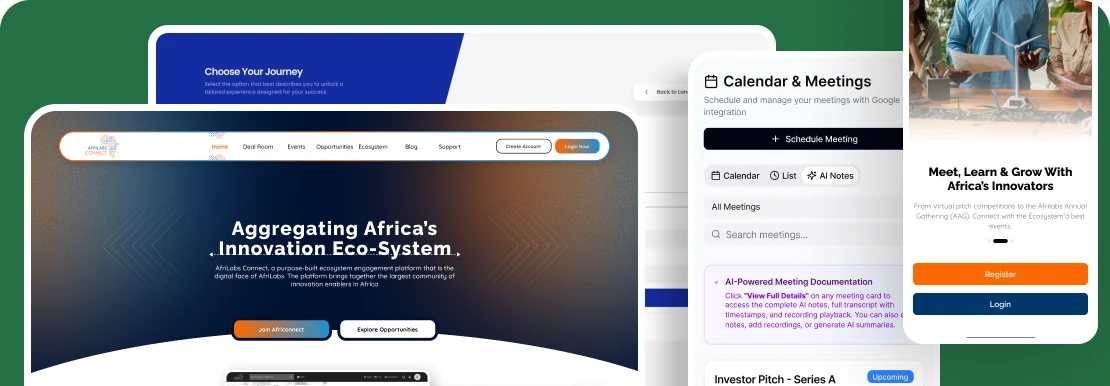
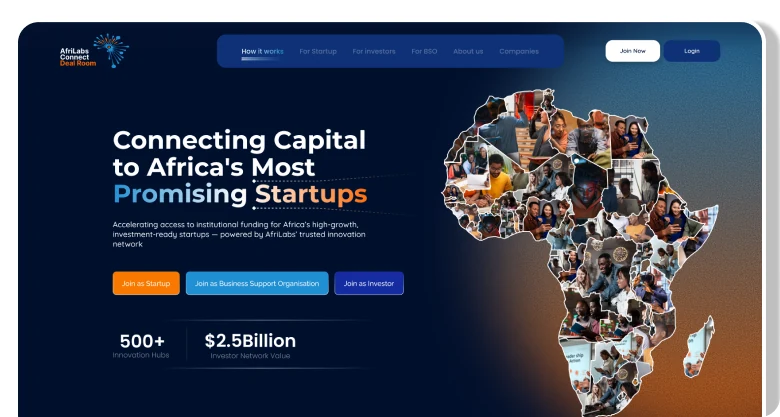
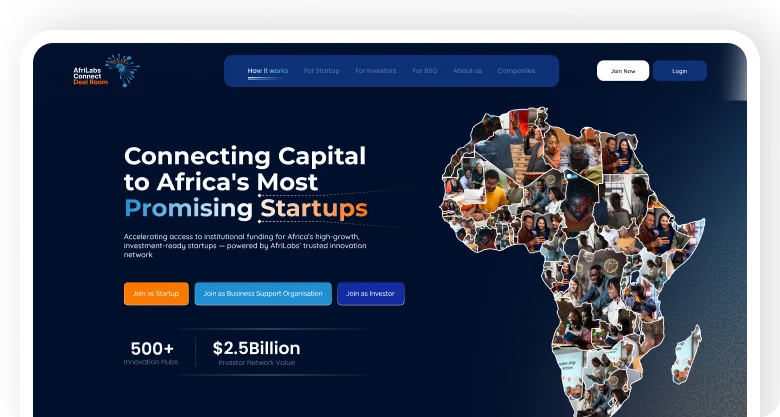
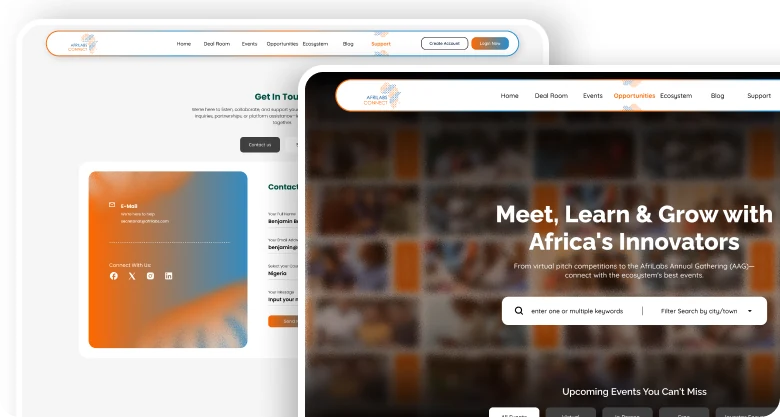
- Redesigned landing page
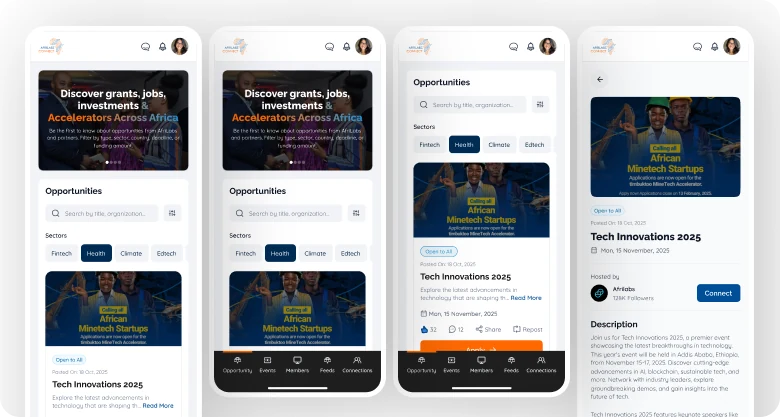
- New mobile app experience
ACDR
A dedicated investment and deal-management platform connecting investment-ready startups with investors through BSOs and AfriLabs operations.
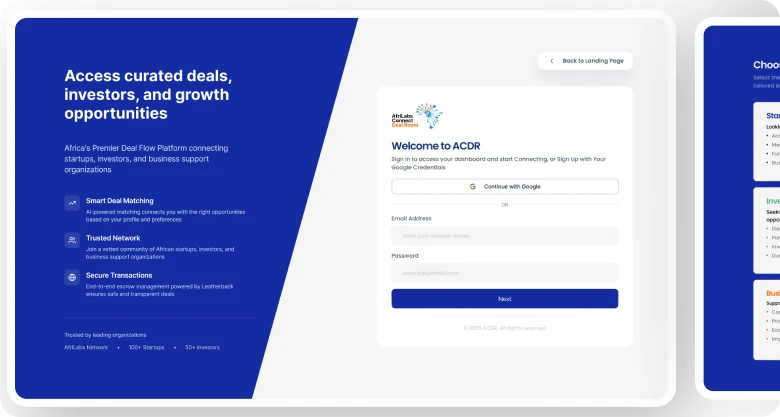
- Startup and investor onboarding
- Verification and governance workflows
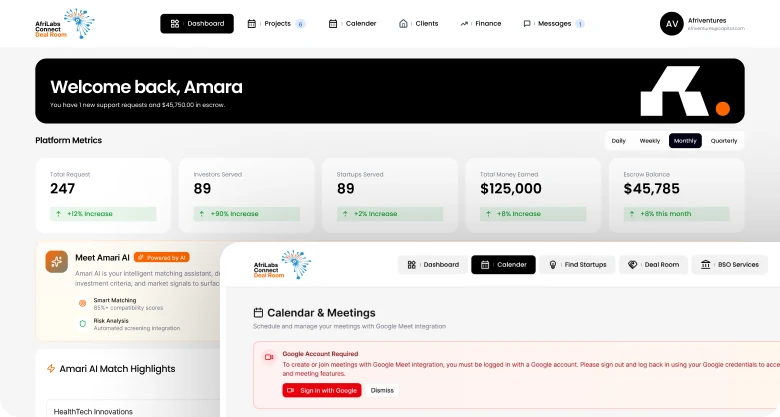
- Deal pipeline and project operations
- Matchmaking and investor discovery
- Admin, finance, and audit oversight
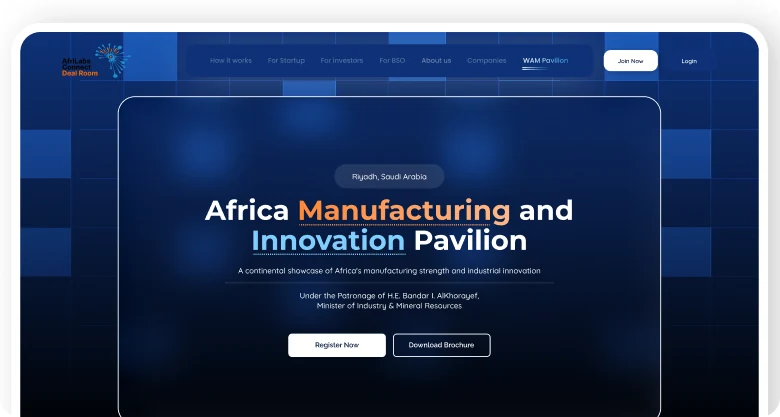
- Redesigned landing page
05 Design decisions
The strongest decisions here were structural — what belongs together, who needs to see what, and how the platform exposes complexity without making users carry it.
Role-based experiences
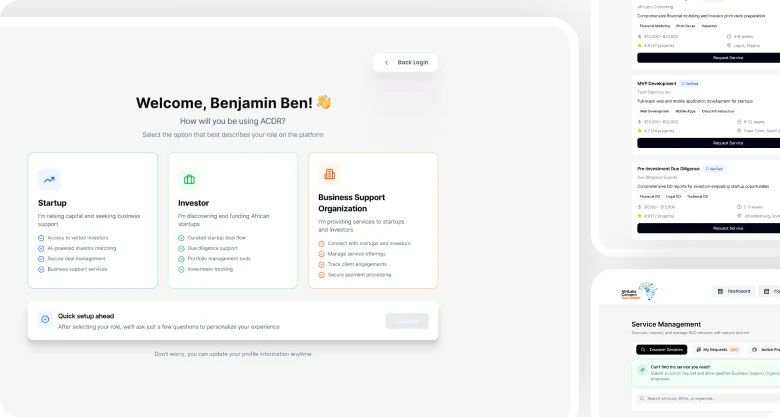
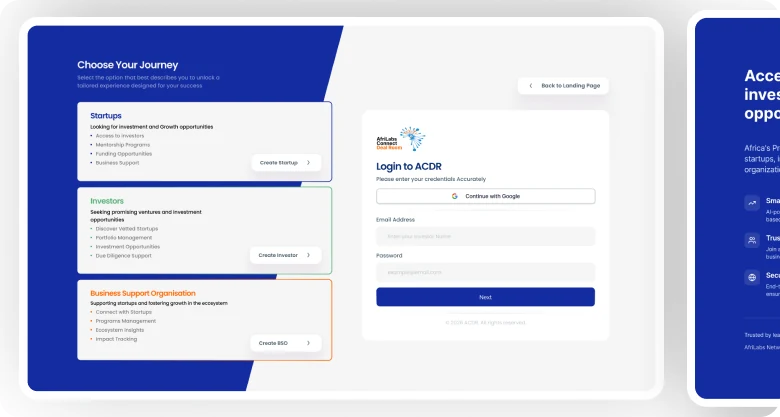
The MVP had no clear entry points — a flat collection of features that made it hard for different stakeholders to find their way in. I reorganized the architecture around user intent instead, so a founder, an investor, and an ecosystem administrator each land somewhere built for what they're trying to do.
Onboarding cut from many steps to three
Onboarding for startups, investors, and BSOs was cumbersome enough to cause real cognitive overload before anyone reached the platform's value. I simplified it to three steps — still capturing everything the platform needed, without asking someone to think hard before they'd seen anything worth staying for.
Trust filter + Kanban-style deal vetting
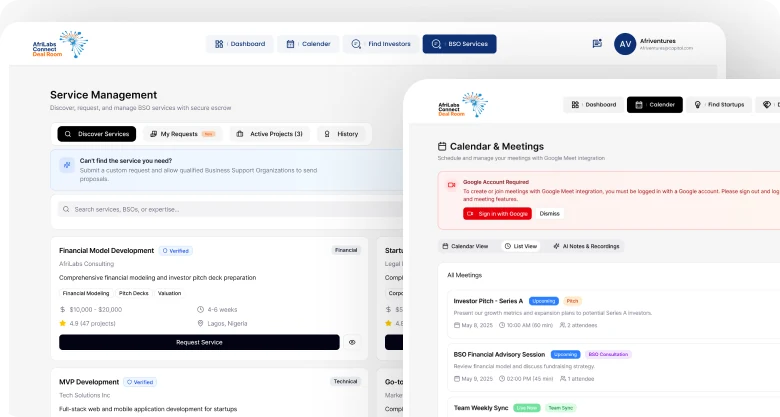
Investors on ACDR needed to vet documents and track progress across many startups at once. I added a KYC-style trust filter to verify startup identity and credibility upfront, and introduced a Kanban-style sorting system so investors could move startups through vetting stages and track progress without losing track of where each one stood.
Admin oversight built for scale
AfriLabs needed a way to manage interactions across the whole ecosystem, not just within a single deal. I designed an admin management system and dashboard giving AfriLabs visibility and control over user interactions and deal sorting across every stakeholder relationship on the platform.
06 A design system built for operational scale
For ACDR specifically, the design system was built around enterprise dashboards, financial workflows, multi-role permissions, and high-density operational interfaces — reusable components and tokens meant to hold up under dense enterprise use without slowing down iteration.
07 Reflection
This project sharpened how I lead strategic conversations, navigate competing stakeholder needs, and design products that have to work as connected systems rather than isolated features.