MeetSession.
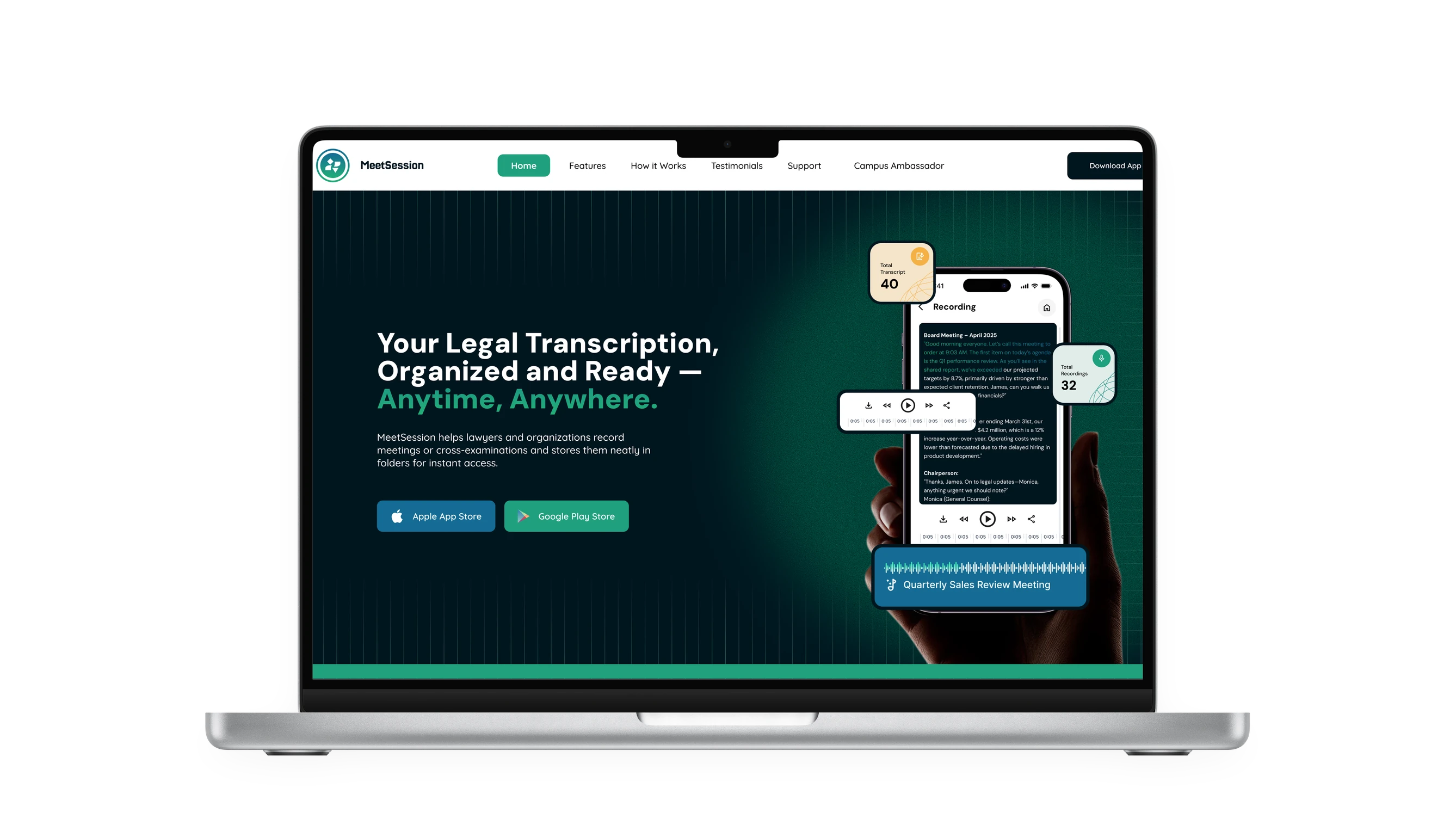
Designed a meeting intelligence platform from idea to implementation, now live. A meeting capture product for lawyers, board members and students who need to take part in a conversation and document it accurately, designed with no existing product to build from.
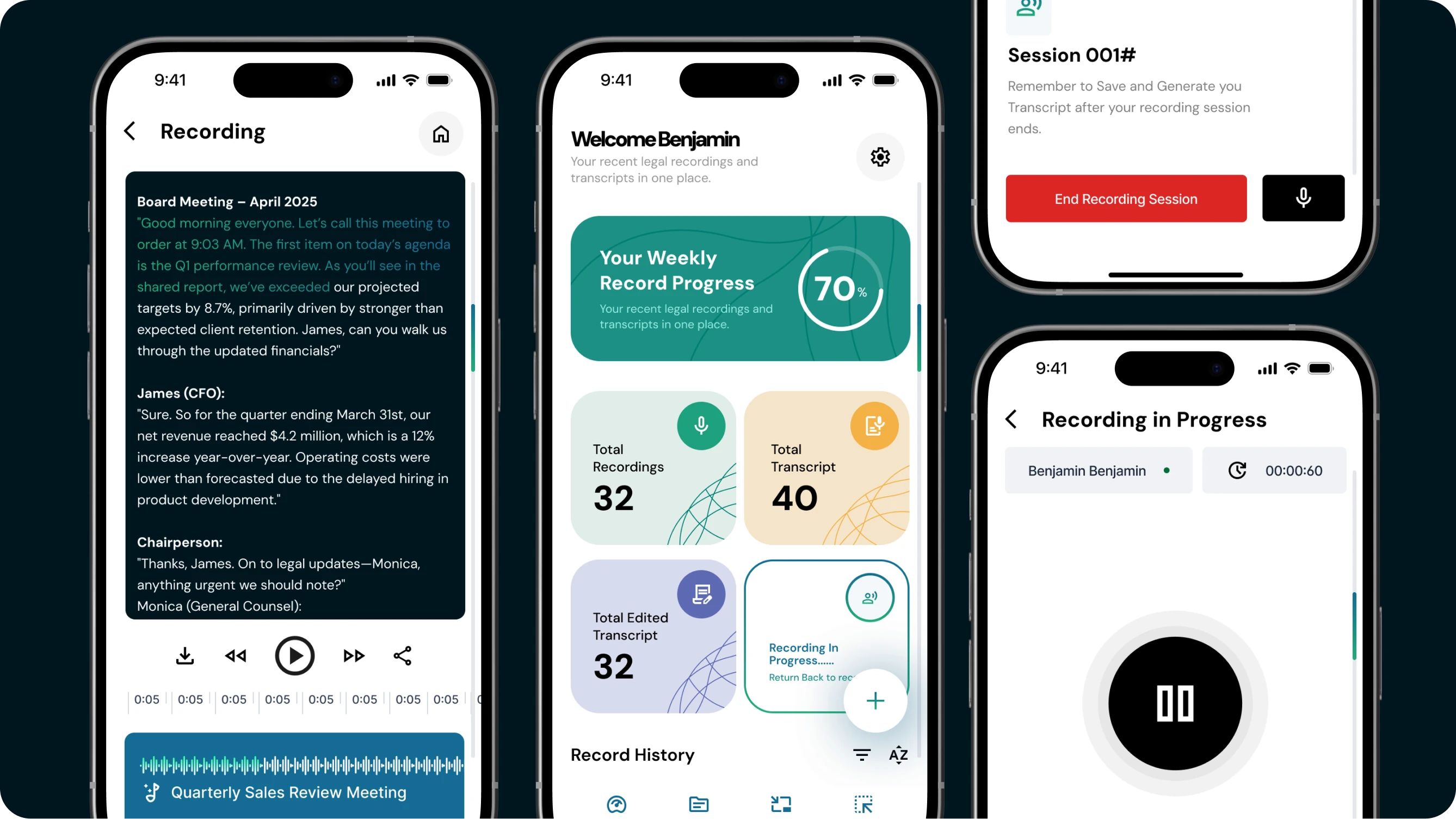
I designed a meeting recording and transcription product from scratch, based on direct conversations with lawyers, board members and students. I chose folders over tags, fixed an onboarding drop-off point and shaped AI summarisation directly from user feedback. The product the team launched on this foundation has grown to 716+ users.
The problem
Lawyers, students and board members share one problem: they can take part fully in a conversation or document it accurately, but rarely both. A missed detail in a cross-examination carries different stakes from a missed point in a lecture, but the trade-off is the same.
There was no existing product to audit. Before the PRD existed, the founder held discovery conversations with lawyers, students and business professionals. I designed the first version from that foundation, working from the founder's vision and PM-written PRDs.
Research: user conversations before design decisions
With no product data to lean on, I spoke directly with a small group of core users, mostly lawyers, board members and students, before and during design, and made explainer videos to gather early reactions before full builds.
The most useful thing wouldn't be the raw transcript. It'd be a clear set of key notes and action points I could look at right after a meeting and know exactly what's required of me.
Board of Directors member
So AI summarisation and key-point extraction became a core feature: the product surfaces what someone needs to act on, not just a record of what was said. It carries the conversation forward into something usable.
Key decision: folders, not tags
A recording product could default to a chronological feed or tags. I chose folders, because these users already think in ongoing contexts: lawyers by case, students by course, board members by meeting series. They needed to group recordings by that context, not search for one past session at a time.
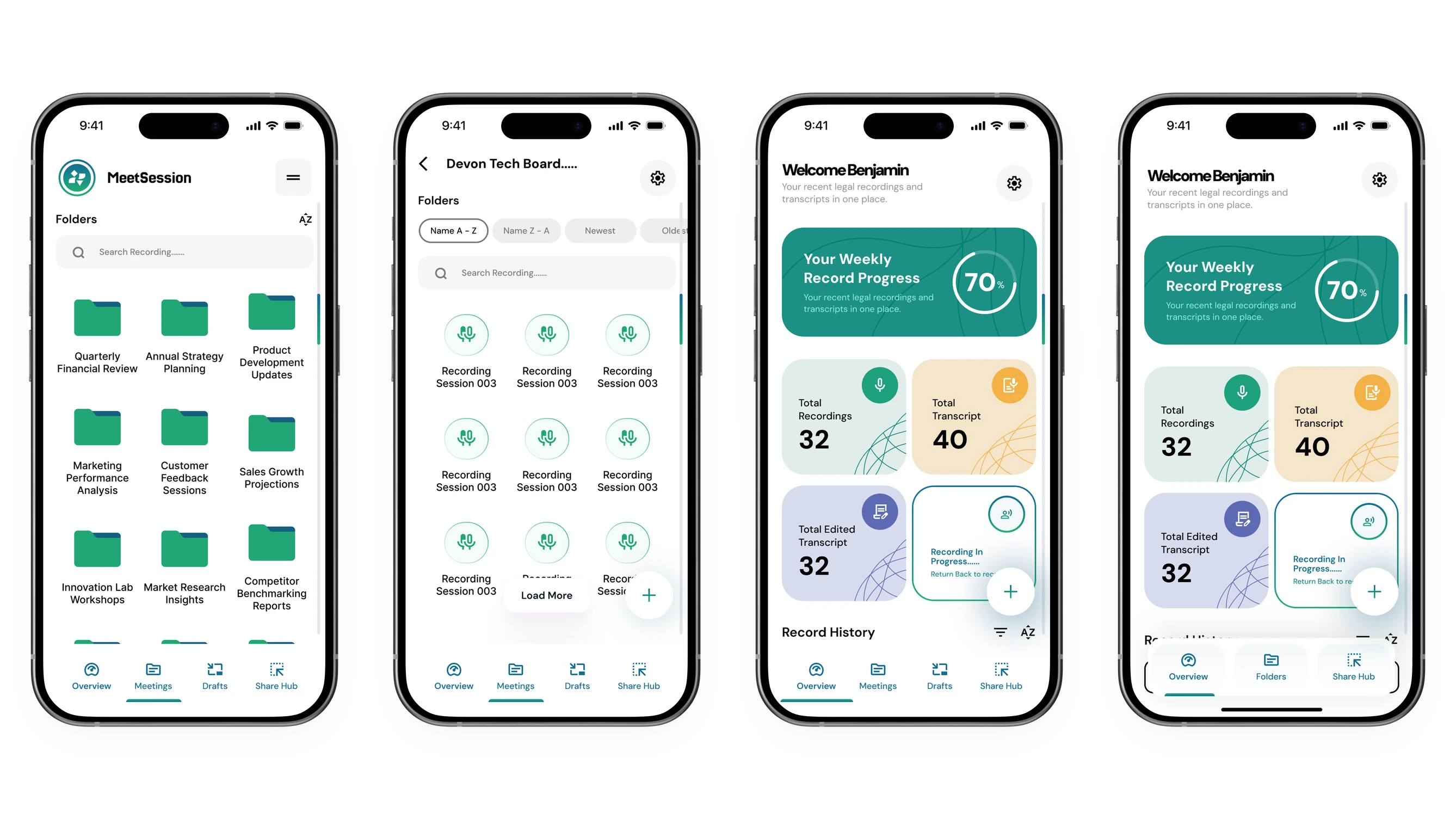
Fixing onboarding after watching clients hit friction
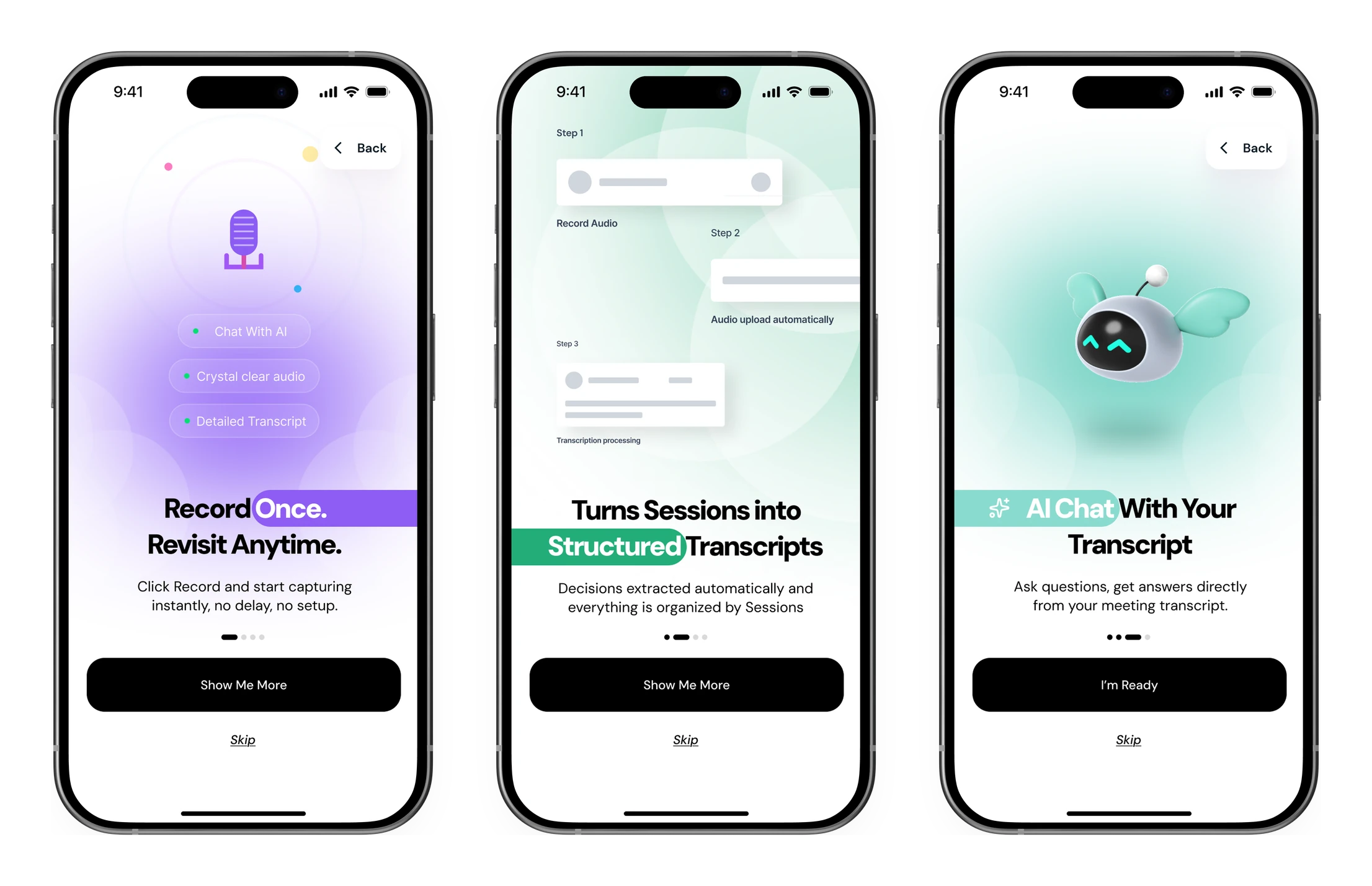
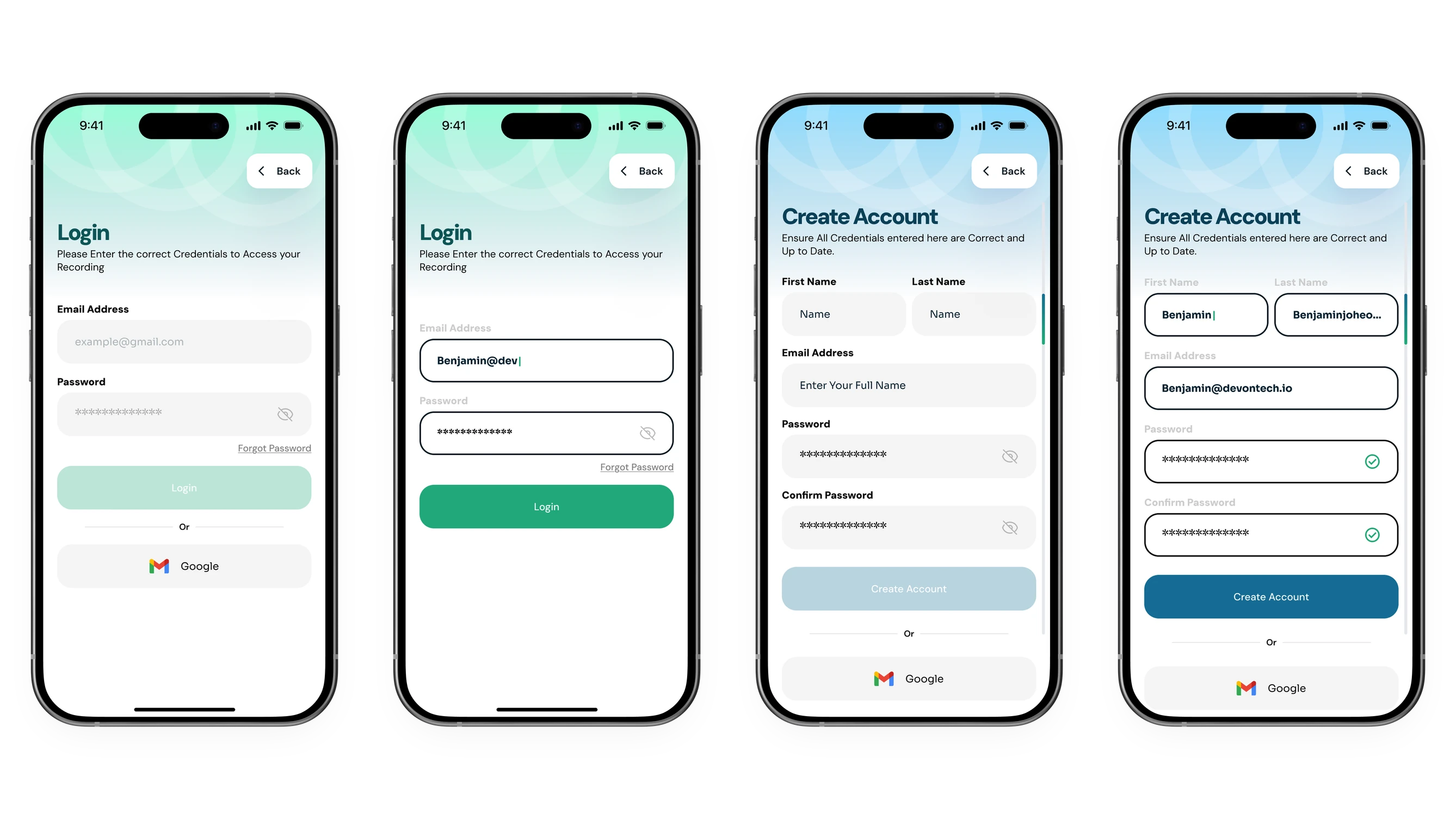
Onboarding was not settled in one pass. Watching clients move through it surfaced a drop-off point: permission requests appeared before people understood why the app needed them.
Permissions are now asked once the reason is already clear.
The core loop
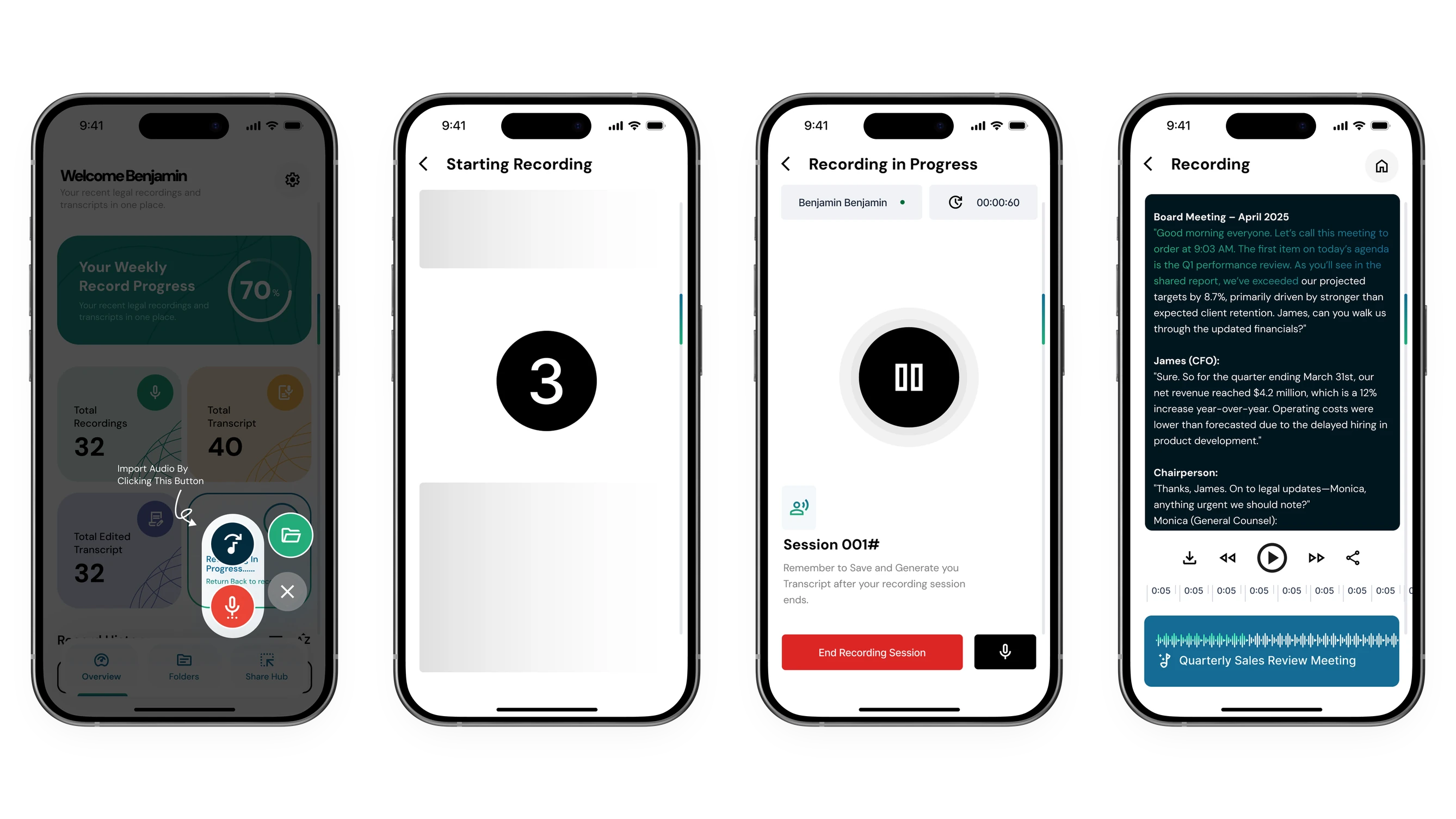
Despite the range of uses, the main flow had to stay simple enough to use under time pressure. Starting a recording in a live meeting is not the moment for a complex interface.
- 1
Record
Start capturing with minimal friction.
- 2
Transcribe
A structured, speaker-differentiated transcript.
- 3
Organise
Filed into folders for later retrieval.
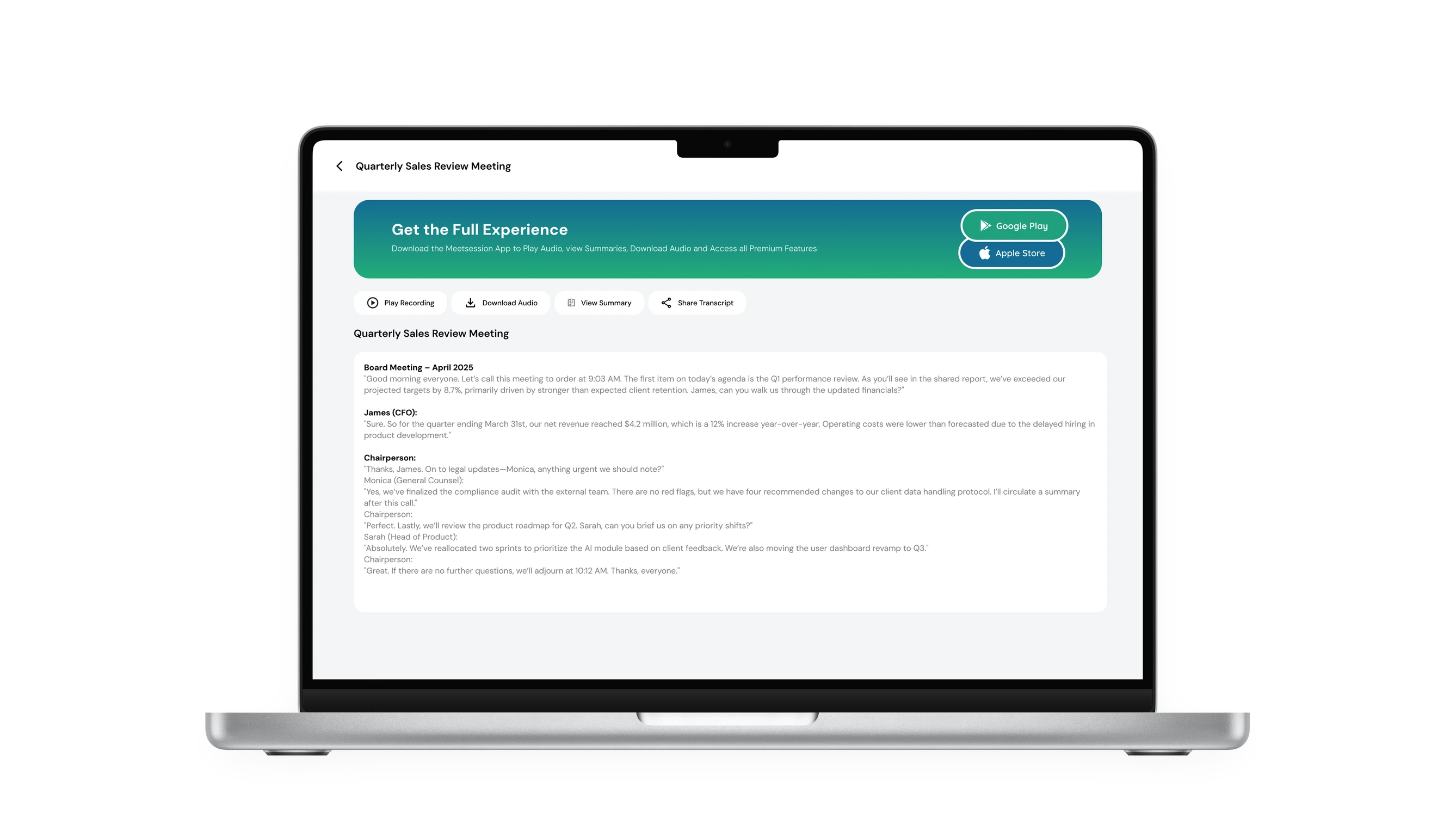
Around that loop I designed what makes a transcript useful afterwards: AI summaries, transcript management and export, drafts and audio import; biometric protection for sensitive recordings, given legal and corporate use; and a dedicated cross-examination mode for structured question-and-answer capture in legal settings.
Process: the full flow map
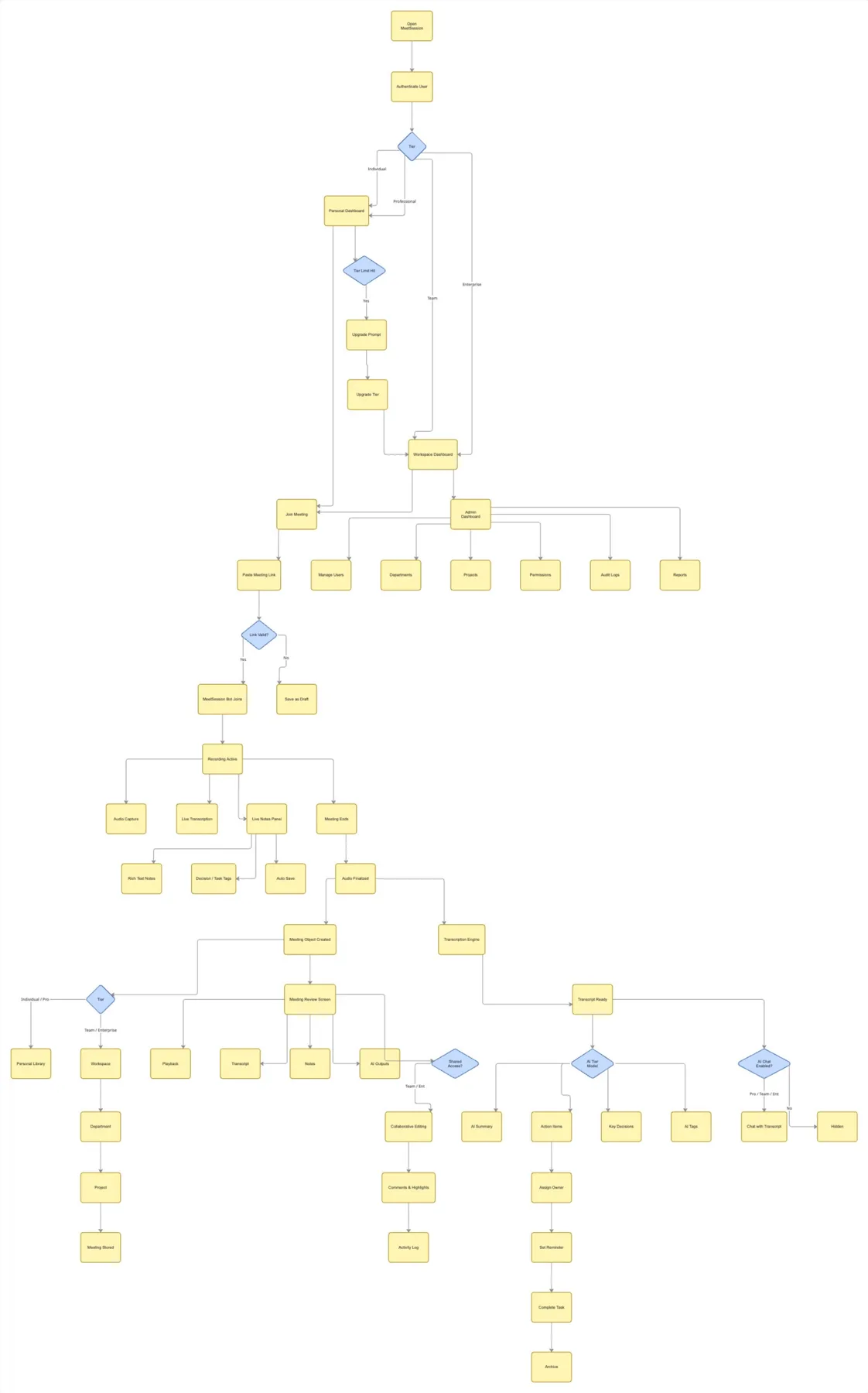
The mobile app is one entry point into a larger system. Under the record, transcribe and organise loop sit tier-gated access, a nested organisation hierarchy, an AI processing layer and a full admin and governance layer for workspace accounts, all mapped and designed within the same four months before screens were drawn in detail. This is the flow map I built and worked from: every screen, decision point and tier branch.
Where it is now
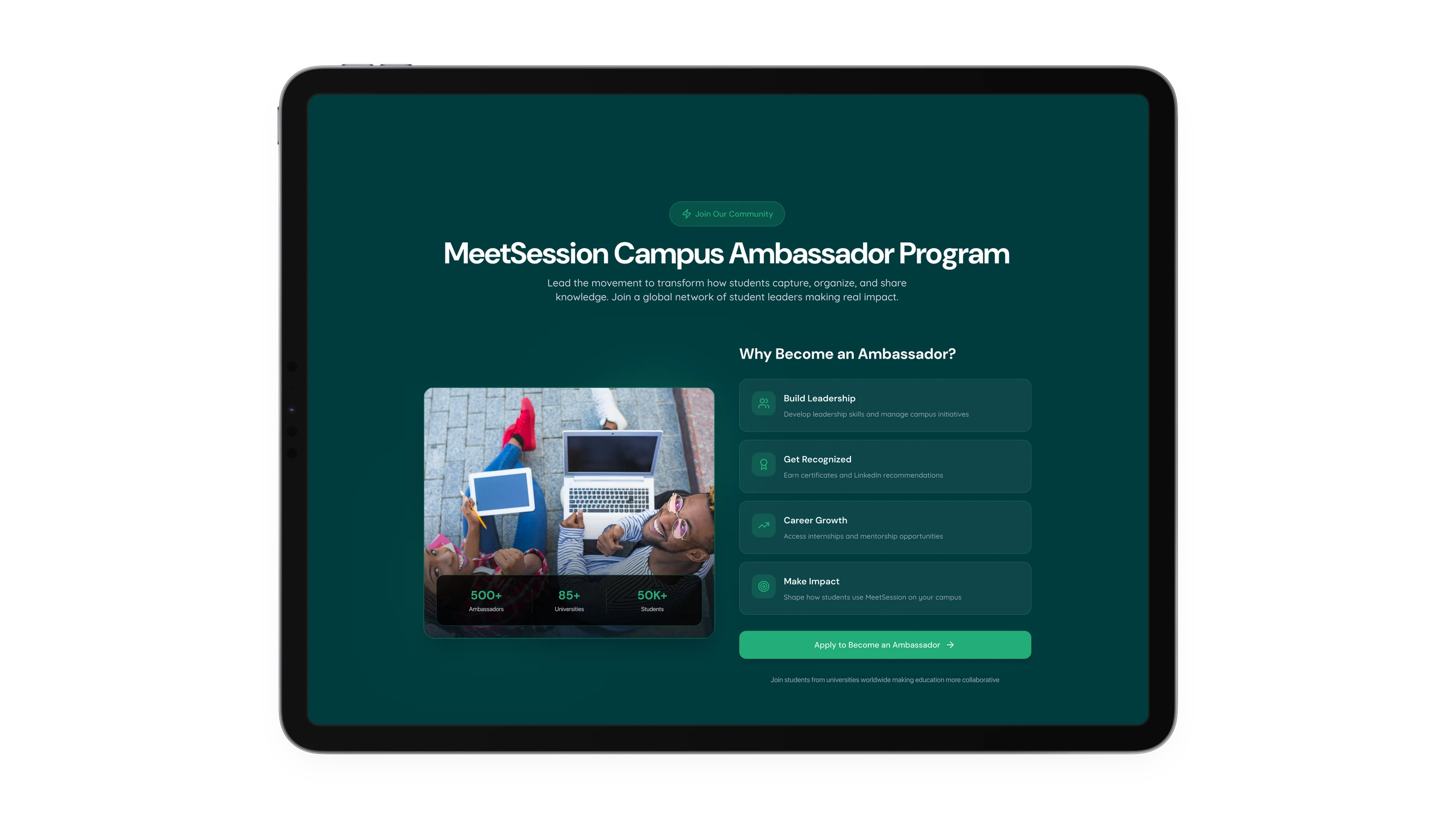
There were no users, transcripts or meetings before this design work. These are current, product-wide figures: growth continued after my four months through the team's ongoing work, including a campus ambassador programme, on top of the foundational product experience I designed from an empty state.
What this project tested
Designing from zero for very different users meant every major decision, from how sessions are organised to what onboarding asks of a first-time user, had to come from direct conversation rather than inherited precedent. Research before decisions ran through the whole engagement.

Available for new work.
Let's talk about yours.
A product to build, a role to discuss, or a walkthrough.
Send Me an Email